7 Warning Signs Your Septic System Is Failing (And What to Do)

Septic system problems often start quietly — a strange odor here, a slow drain there — until suddenly, you're dealing with a full-blown backup or an expensive repair. Knowing the early warning signs of septic failure can help you act fast and avoid thousands in damage. At Frank’s Septic & Pumping, we’ve helped Texas homeowners prevent and resolve septic system failures for over 16 years. This guide covers the
top signs of septic failure and what you should do next.
Why Septic System Failure Happens
Septic systems are designed to work efficiently for decades, but they rely on regular maintenance and the right usage. Failure usually occurs due to:
- Overuse or system overload
- Lack of pumping
- Damaged components (pipes, baffles, lids, etc.)
- Tree root intrusion
- Soil saturation or drain field issues
- Improper system design or installation
The good news? Most failures show early signs before they become disasters — if you know what to look for.
Sign #1: Slow Drains Throughout the House
If you notice all your drains — sinks, tubs, showers — starting to slow down at the same time, it could be more than a clog.
What it means:
Your septic tank could be full, or the outlet pipe to the drain field may be blocked. Slow drains are a common early warning of system failure.
What to do:
Schedule a pumping and inspection right away.
Sign #2: Gurgling Sounds in Pipes or Toilets
If you hear gurgling noises when flushing the toilet or running water down the sink, your system may be struggling to handle wastewater flow.
What it means:
Air could be trapped due to a full tank, clog, or damaged venting system.
What to do:
Have the system checked before pressure builds and causes a backup.
Sign #3: Foul Odors in the Yard or Home
A strong sewage smell around your yard or inside your home is never a good sign.
What it means:
A full or leaking septic tank could be releasing untreated sewage. The odor may come from the tank itself, the drain field, or backup into interior pipes.
What to do:
Call immediately for inspection. Odors often mean your system is already leaking or overflowing.
Sign #4: Standing Water or Soggy Ground Near the Septic Area
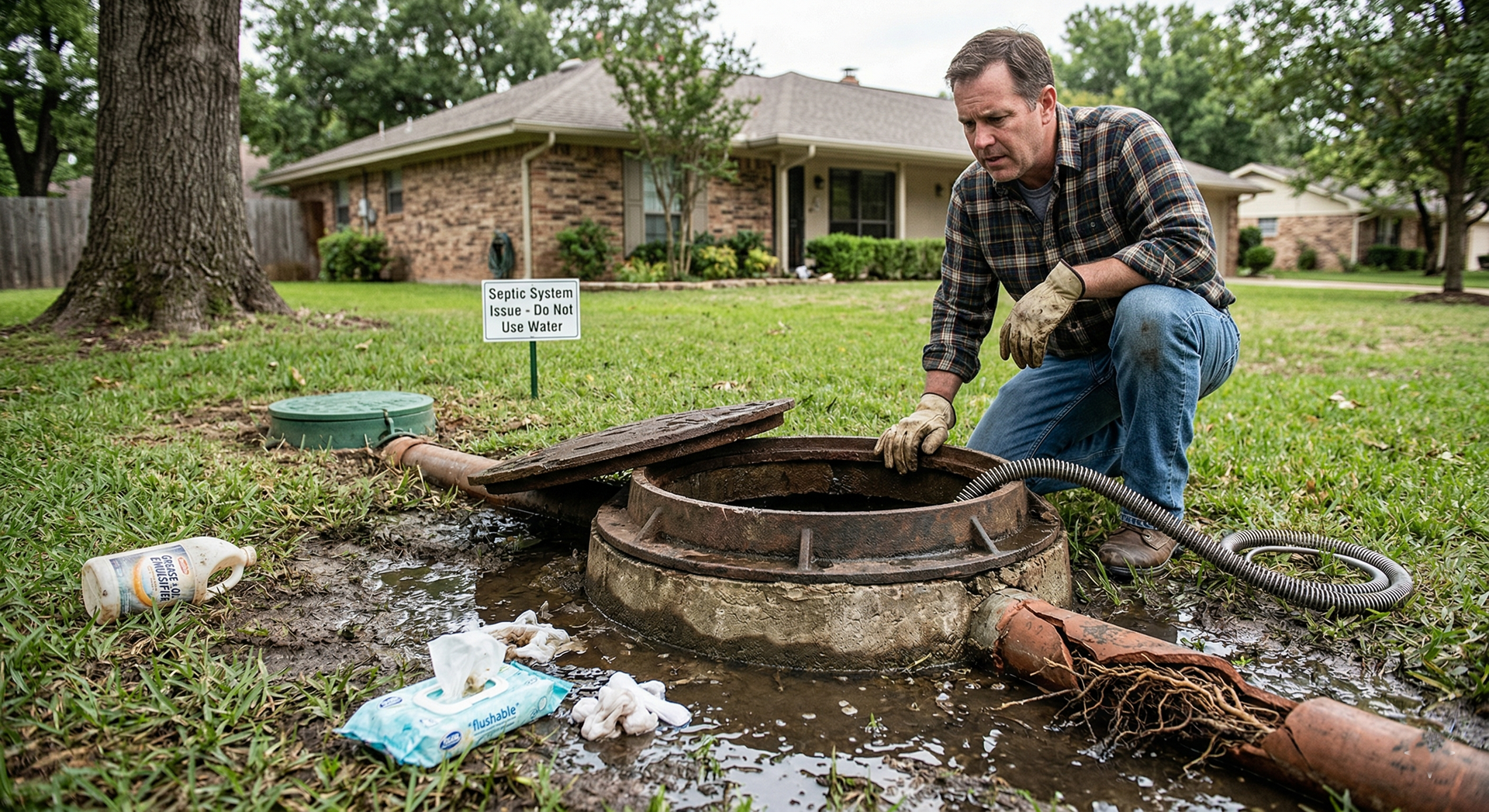
If the ground above your tank or drain field is constantly wet — especially during dry weather — your system may be leaking or oversaturated.
What it means:
The drain field isn’t properly dispersing water, often due to clogs, root intrusion, or soil compaction.
What to do:
This issue can lead to total drain field failure. Get a professional inspection ASAP.
Sign #5: Unusually Green Grass Over the Drain Field
While green grass may seem like a good thing, overly lush or fast-growing grass in one spot of your yard can indicate a leaking or overworked system.
What it means:
Effluent may be surfacing, providing excess nutrients to the soil.
What to do:
Don't ignore it — surfacing effluent can be a health hazard and a violation of local regulations.
Sign #6: Sewage Backup Into the Home
This is the most obvious and urgent sign — and one of the most dangerous. If sewage backs up into your toilet, tub, or sinks, your system is already failing.
What it means:
The tank may be full, the pipes could be clogged, or the drain field has stopped working altogether.
What to do:
Stop using all water in the house and call for emergency service immediately.
Sign #7: Aerobic System Alarm Is Going Off
If you have an aerobic septic system, it likely includes an alarm panel that lights up or buzzes when something's wrong.
What it means:
The alarm could indicate high water levels, power loss, aerator failure, or chlorine depletion.
What to do:
Do not reset the alarm without investigating the issue. Call a licensed aerobic system technician right away.
What to Do if You Suspect Septic Failure
If you notice one or more of the signs above, don’t wait. Acting fast can mean the difference between a simple pump-out and a total system replacement.
Step-by-step:
- Stop using water (especially laundry or long showers)
- Avoid flushing or using toilets if backups are occurring
- Contact a licensed septic provider like Frank’s
- Schedule a full system inspection and pumping
- Follow repair or replacement recommendations
How to Prevent Septic System Failure
Routine maintenance is the best defense. Here’s how to keep your system working:
- Pump every 3–5 years (or as recommended)
- Inspect aerobic systems 3x per year
- Avoid flushing grease, wipes, and chemicals
- Don’t drive or park over your septic system
- Watch for early warning signs and act quickly
We offer affordable maintenance plans and reminders to help you stay on schedule.
FAQs About Septic System Failure
How do I know if I need a full replacement?
If your drain field is saturated or your tank is cracked, replacement may be necessary. We offer inspections and quotes.
Can you fix a failing drain field?
Sometimes. If the failure is due to clogging or lack of maintenance, we may be able to restore function. In other cases, a new field is required.
Will insurance cover septic failure?
Homeowners insurance usually does not cover septic repairs unless caused by a sudden, covered event. Septic issues are considered maintenance-related.
Is it safe to live in a home with a failing system?
It can pose serious health risks. Avoid exposure to standing wastewater and have the system serviced immediately.
Call Frank’s Septic & Pumping Before It’s Too Late
We’ve helped hundreds of Texas homeowners catch problems early and avoid system failure. If you’re seeing the signs, don’t delay — we offer fast, affordable inspections and emergency service throughout Central Texas.
Call Today: (979) 830-3643
Request a Free Inspection Quote: https://www.frankssepticandpumping.com/contact
Serving Bastrop, Caldwell, Brenham, Bryan, Giddings, and beyond.